
Picture Book
At SolacePath, we encourage thoughtful use of picture books as a gentle tool to support emotional well-being. Choose a book that resonates with your current feelings or life experiences, and set aside unhurried time to read in a calm, comfortable space. As you move through the pages, pause to notice your emotional responses to the colours, images, and storyline. You may wish to reflect on questions such as: Which character do I relate to? What emotions are being expressed? What part of this story feels familiar to me? Journaling a few insights or discussing them in counselling ( or the people you feel connected with) can deepen the impact. Re-reading the same book at different times can also reveal new meanings, helping you gain perspective, validation, and a sense of comfort along your journey.
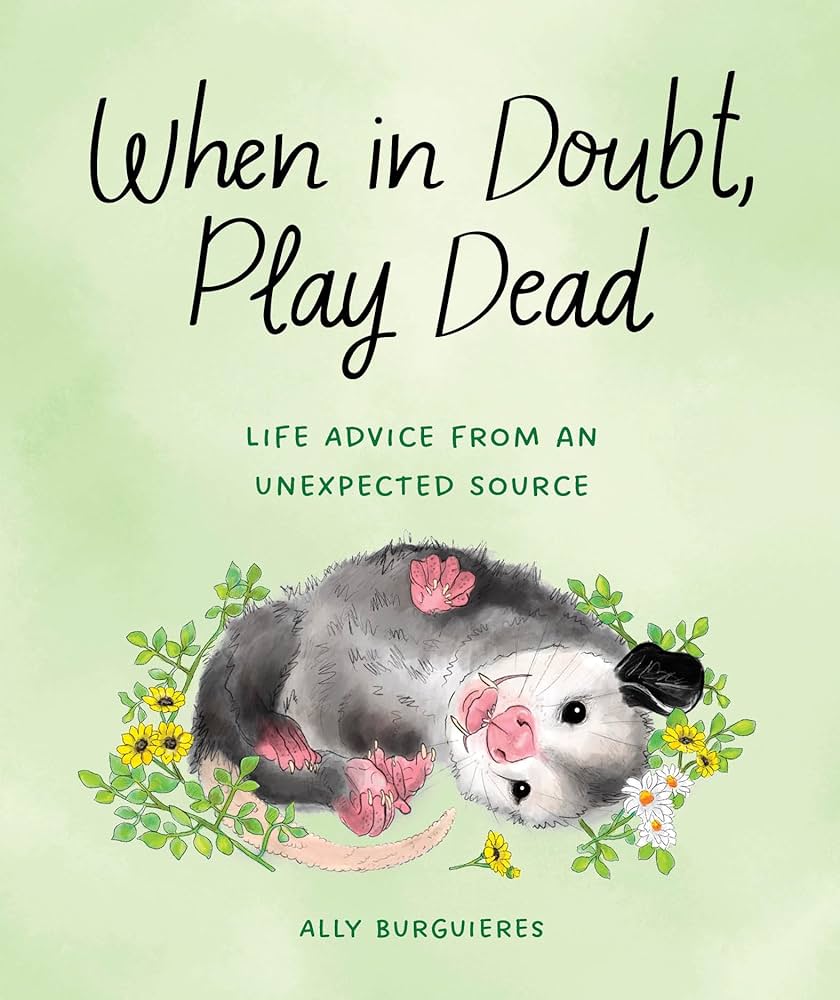
Have you ever felt so overwhelmed that even reading a long paragraph feels like too much? When in Doubt, Play Dead is the kind of book that meets you exactly there.
What immediately stands out are the vivid, adorable opossum illustrations. Soft, expressive, and full of personality, the images draw you in before you even focus on the words. The text itself is brief but insightful. Each page offers a small reflection, inviting readers to linger without pressure. The spacious layout creates room to breathe, making the book especially comforting during seasons of emotional fatigue.
From the beginning, the author addresses common misconceptions about opossums—their fragility, their limitations, and the instinct to “play dead.” Yet instead of portraying these traits as weaknesses, the story reframes them as part of a resilient way of living. Opossums survive, adapt, and continue forward in their own unassuming manner. Through this lens, readers are gently reminded that vulnerability does not diminish strength. Sometimes resilience looks quiet. Sometimes it looks like resting, pausing, or protecting oneself when necessary.
Alongside the beautiful and whimsical illustrations, the book offers life wisdom inspired by the opossum’s way of being. Themes of self-compassion, resilience, and relationships are woven throughout. It speaks to navigating rough times, learning from setbacks, and allowing growth to unfold gradually. It also reminds us not to forget enjoyment—to stay curious, to connect, and to remain open to small joys even after moments of retreat.
Highly recommended for anyone seeking an “easy retreat” from an overwhelming world, this book provides gentle reassurance and inner solace. It is a tender reminder that even when we feel unsure or stretched thin, we carry within us the quiet capacity to endure, adapt, and eventually step back into life.
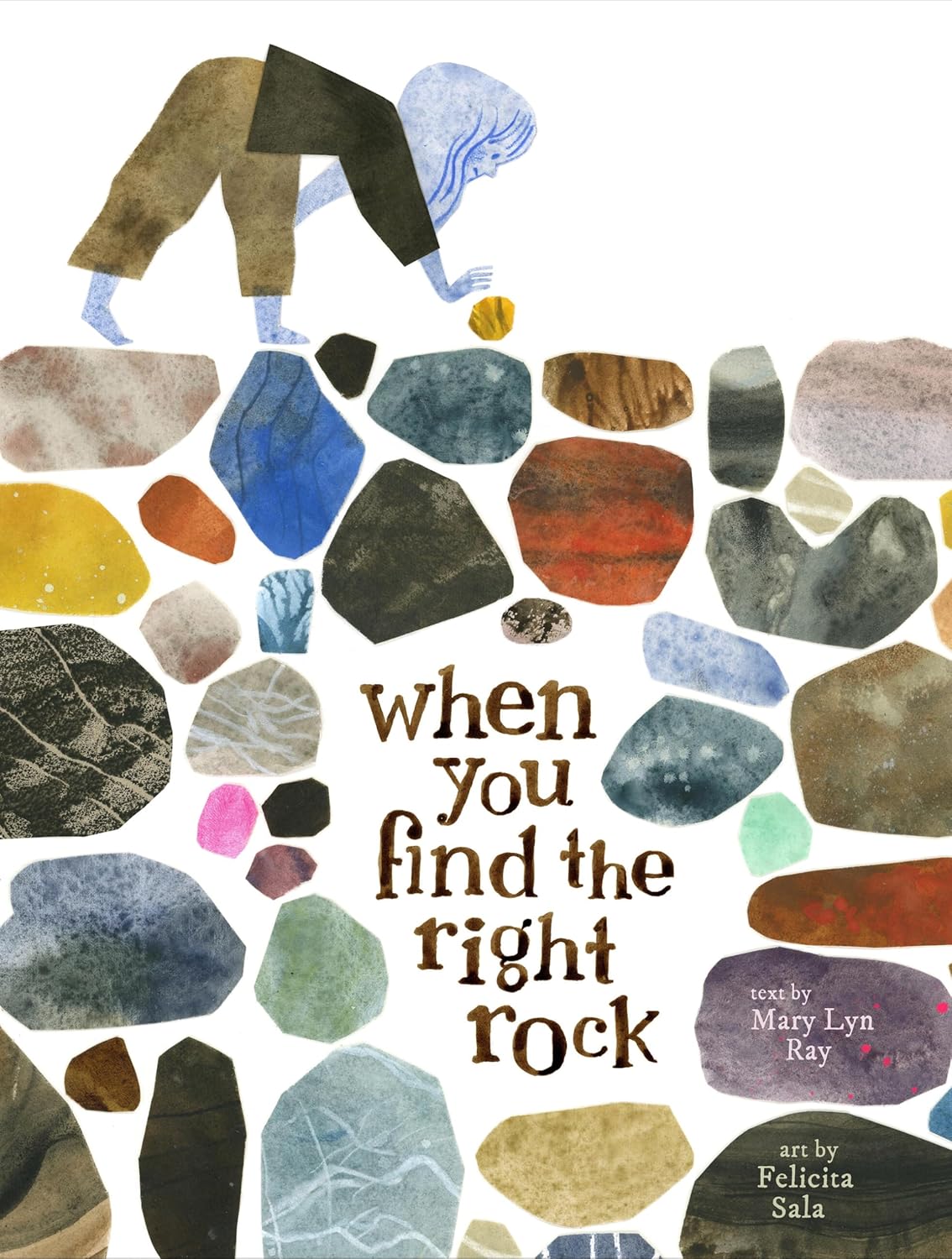
Do you like rocks? Do you collect them? Have you ever wondered whether your lived experiences are like different rocks—each one shaping who you are today?
When You Find the Right Rock invites readers into this quiet reflection. The story unfolds gently, encouraging us to slow down and notice the small, meaningful moments hidden in everyday life. Through simple observations about finding and holding rocks, the book opens space to think about how we recognize what feels steady, grounding, and “right.”
Our lived experiences hand us many kinds of rocks. Some feel heavy, teaching us about the weight of life through significant events or turning points. Others are small but numerous, quietly draining our energy more than we expect. At times, something fits perfectly in our hands and hearts, bringing comfort or clarity. At other times, the stones we carry feel awkward or burdensome. Yet each one contributes to our growth. The book gently encourages mindfulness—welcoming the different “rocks” that appear in our lives and noticing how they shape our understanding and resilience.
What makes this book particularly resonant is its layered meaning. For children, it celebrates curiosity and the joy of small treasures found outdoors. For older readers, it offers a reminder that meaning often reveals itself slowly and that not everything valuable is loud or obvious. The “right” things—people, places, ideas, or moments—often feel steady and grounding when we encounter them.
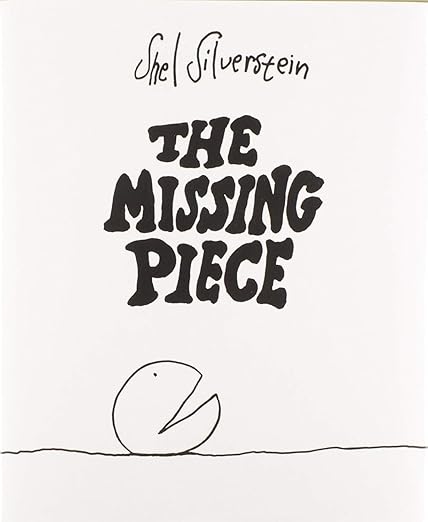
The Missing Piece is highly recommended for anyone exploring questions of love, connection, and self-growth. It’s a tender, insightful meditation on longing, discovery, and the balance between intimacy and individuality.
The story follows a circle missing a wedge-shaped piece. Feeling incomplete, the circle sets off on a journey to find its missing part, hoping that this “missing piece” will make it perfect. Along the way, the circle enjoys meaningful encounters with everything it meets on its journey. Each experience offers discovery and learning that enrich the circle’s path. When it finally meets the “perfect” piece, the circle feels thrilled and complete. Yet unexpectedly, that sense of wholeness shifts into a kind of tightness—one that leaves little room for growth, independence, or the simple enjoyment of life.
The story provides a thoughtful reflection on intimacy and relationships. Often, we seek a “better half,” hoping someone else will fill our gaps and act as a savior. We imagine that finding this piece will make us whole, but we may be disheartened to realize that this “wholeness” can sometimes leave us feeling stuck rather than fulfilled.
The Missing Piece illustrates the importance of nurturing personal growth within a relationship. It reminds us to remain flexible—able to work together toward shared goals, like creating a loving family—while also allowing space to pursue personal goals, cultivate skills, and find individual fulfillment. Happiness, the story gently suggests, is often discovered along the journey—both together and apart—rather than solely in finding a “perfect” other.
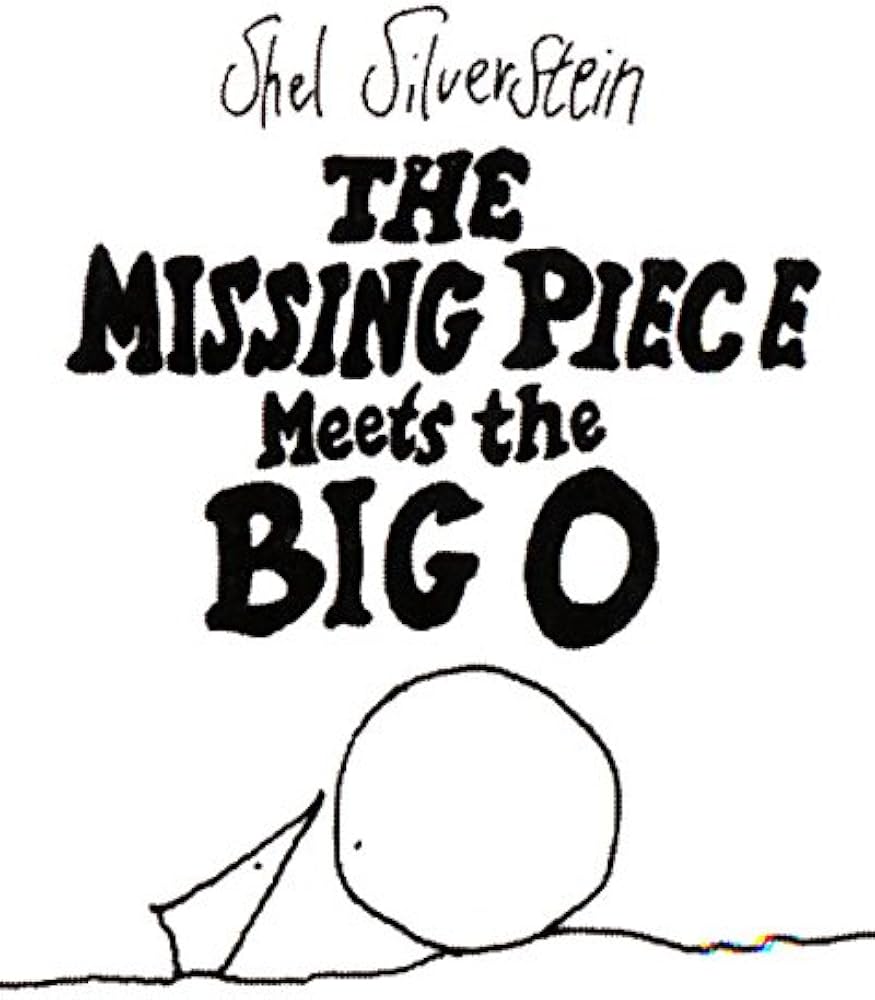
This book begins with the Missing Piece sitting and waiting—hoping someone will come along, pick it up, and make it complete. Like many of us, it believes fulfillment will arrive when the “right” other appears.
Along the journey, the Missing Piece meets many different shapes. Some seem to fit but can’t roll forward together. Others roll smoothly but don’t truly fit. Some have no interest in fitting at all, while others have so many gaps of their own that connection feels impossible. The Missing Piece even tries to make itself more appealing—changing, adjusting, hoping to be chosen. Yet after many attempts, it feels frustrated and discouraged about not being picked up.
Eventually, it meets the Big O—a round shape who seems confident, happy, and complete. At first, the Missing Piece admires the Big O and wishes it could be that whole. But instead of carrying it, the Big O gently declines. Rather than rescuing the Missing Piece, the Big O leaves behind an important insight: no one else can do the work of making you whole.
Inspired, the Missing Piece begins working on itself. It softens its own edges, grows, and slowly transforms. In time, it becomes round enough to roll on its own—and eventually catches up with the Big O, not as something to be carried, but as an equal.
Through this simple yet powerful journey, the story reminds us that relationships are not about filling gaps or finding perfection in someone else. Meaningful connection grows from mutual respect, shared experiences, and personal growth. Intimacy does not require losing ourselves; instead, it calls for flexibility, curiosity, and space for both partnership and individuality.
The Missing Piece Meets the Big O offers a warm and timeless message: the healthiest relationships happen when two whole beings choose to roll alongside each other—together, but not dependent; connected, yet complete in themselves.
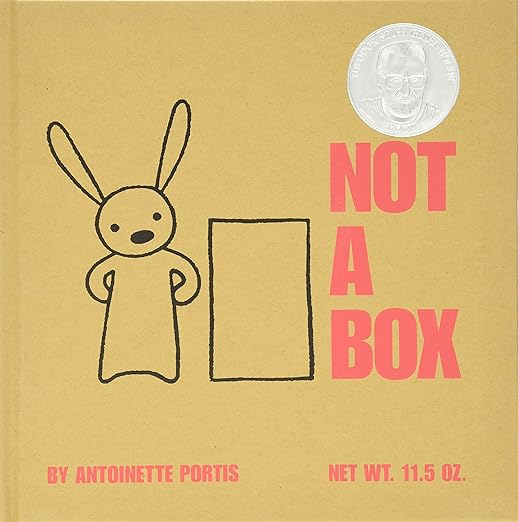
“Not a Box” is a fun, creative picture book that promote the magic of pretend play. With simple drawings and just a few words, a little bunny shows us how a plain cardboard box can become just about anything—a race car, a mountain, a rocket ship, you name it! Every page sparks kids’ imaginations and encourages them to see everyday stuff in totally new ways. It’s a great read for little ones and their families—and a sweet reminder of how powerful a child’s imagination really is.
When a child pretends a box is a rocket ship or a mountain, they’re doing more than playing—they’re learning to solve problems, think creatively, and express emotions. They're experimenting with ideas, testing boundaries, and building confidence in how they see the world.
Imaginative play builds emotional resilience. It helps children process feelings, try on different roles, and feel safe exploring big emotions in small, manageable ways. That kind of play lays the foundation for empathy, flexibility, and self-awareness.
Parents and caregivers have the incredible opportunity to nurture this creativity every day—by slowing down, asking open-ended questions, and simply playing along with the kids. Whether it’s turning a rainy afternoon into a cardboard rocket launch or reading stories that spark new ideas, we expand not just their world—but our own.
So next time you see a box, pause and wonder with your child: "What could this be today?" Because inside that box is more than cardboard—it’s the start of lifelong learning, imagination, and connection.
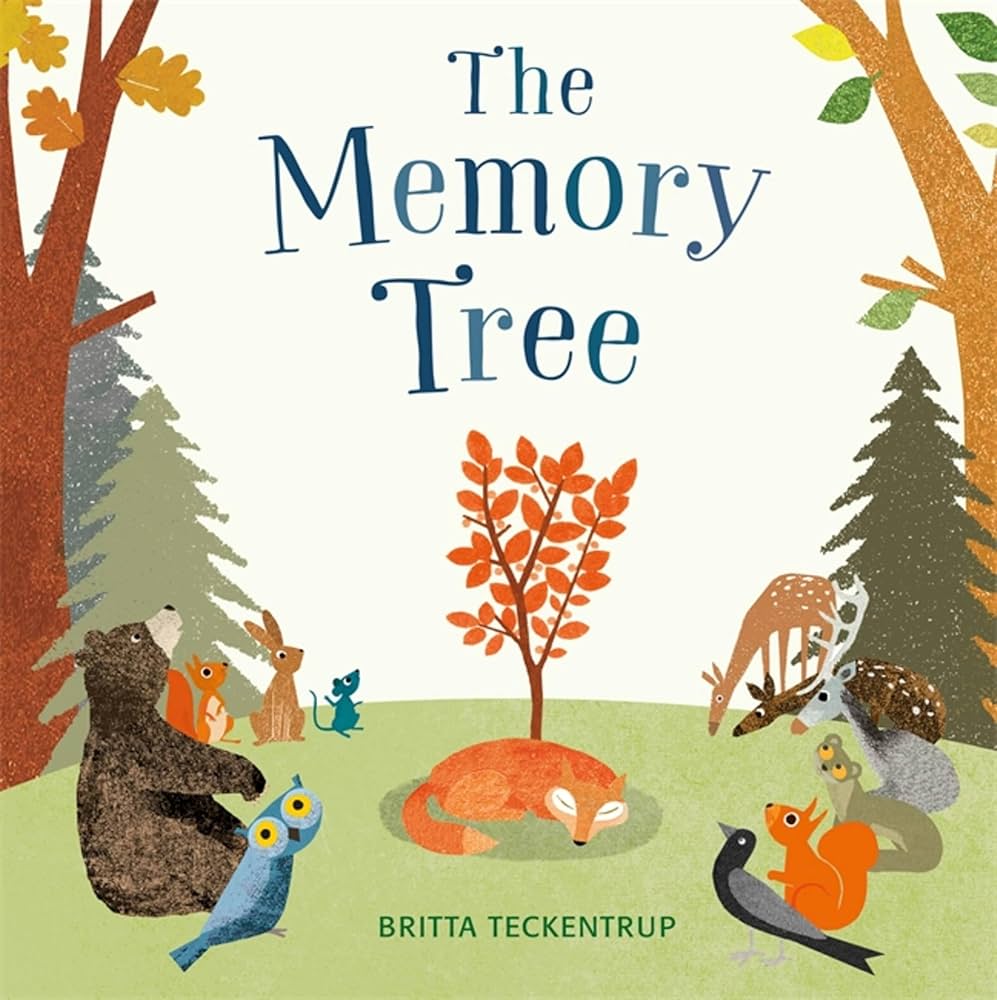
Grief and death are difficult topics to talk about at any age. Even as adults, loss can feel overwhelming—especially when it is sudden or hard to understand. The emotions that come with grief are often layered and complex, and many people struggle to find words for them. The Memory Tree offers a gentle and accessible way to approach these experiences, presenting grief not as something to carry alone, but as something that can be shared.
The story begins with Fox lying peacefully in the forest. The other animals gather around him, sensing that he has died. At first, they feel the weight of sadness and absence. Over time, however, they begin to share their memories—how Fox cared for them, helped them, and brought warmth into their lives. With each memory spoken, a small seed falls to the ground where Fox rests. Eventually, these seeds grow into a beautiful tree.
The tree becomes a powerful symbol of legacy and continuity. It reflects the idea that a life does not end simply because a heartbeat stops. The love given, the kindness shown, and the moments shared continue to live on in those who remember. Though death brings physical separation, the influence of a person remains—carried in stories, values, and relationships.
Through the animals’ collective storytelling, the book shows how healing can happen within community. Remembering together transforms private sorrow into shared connection. The growing tree also represents the natural cycle of life—how endings and beginnings are intertwined. Loss reshapes us, but it can also deepen our appreciation for one another and strengthen the bonds that sustain us.
The story gently reassures readers that while grief is painful, it is also part of being human. Shared remembrance can nurture resilience, keep love alive, and help us move forward while still honoring those we have lost.
| |
Journals
The journals listed below reflect my work and are intended to support perspective-taking and understanding of counselling practice. All client details have been altered to protect privacy and ensure they cannot be identified.



My AI therapist
A new client shared with me about her struggles in her relationship with her parents, feeling unsupported and unseen. But she said that now she’s improving—learning to set boundaries by reducing contact and creating psychological distance. When prompted on how she managed to do this, she said she talked with AI, which comforted her and helped her learn practical skills. Despite this perceived progress, she reflected that interactions with AI lack warmth and human presence, which ultimately led her to seek counselling sessions for more relational support.
This is becoming a common trend—more people are using AI as their 24/7 counselor. People often ask: Is it the same as counseling—or even better?
Supporters highlight its convenience, cost-effectiveness, and privacy (despite ongoing concerns about cybersecurity). Those against it argue that AI is “just a robot”—lacking emotion, warmth, and the ability to offer genuine love and support like a real human being.
While both sides make valid points, these arguments are overly simplistic.
Many people find AI counseling helpful and supportive, but they don’t fully rely on it. They gain cognitive input and insight—benefiting from the “wisdom” generated by big data. In many ways, this is similar to reading a collection of books for strategies and perspectives to cope with challenges.
However, when people become heavily dependent on AI for counseling or connection, it often reflects a deeper, underlying issue—the lack of trust in other human beings.
Unsurprisingly, many people who seek counseling have already experienced multiple emotional injuries, which may be defined as relational trauma. For individuals with complex relational trauma, opening up to others feels unsafe. In contrast, AI feels safer: it can respond to emotional needs, is always available (24/7), predictable (encouraging, affirming, practical), and controllable. Through interaction with AI, people may feel accepted, acknowledged, and sometimes even empowered—positively contributing to the cultivation of self-identity. This form of “connection” is especially appealing to those who have struggled in real-life relationships, and particularly to individuals on the neurodivergent spectrum, who often face lifelong marginalization and oppression.
That is why—even though people know AI is “fake”—they still need it. This reflects the deep, ambivalent attachment needs beneath the surface.
Using AI as counselling without awareness of its potential harm may further fragment the self, intensify ambivalent attachment needs, and create even more barriers to developing healthy relationships. The risks are especially high for vulnerable individuals*.
While many people seek counseling for emotional support and validation, they often forget (or never knew) that the true goal of counseling is growth. This growth happens through understanding and emotional attunement from the start, followed by reflection, insight, and transformation within a safe, non-judgmental environment. It is like creating fine art—through observation, ongoing attention, and attunement, noticing nuance and uniqueness from the outside while connecting from within. This process promotes transformation through both support and challenge. It is a soul-to-soul connection—something only human beings, as fellow mammals, can truly resonate with.
So, the next time you ask yourself, Should I go to AI or a real therapist?—pause and reflect:
· If what you need is a quick fix, temporary comfort, or a bandage solution, you may find satisfaction with AI.
· But if you are seeking healing and spiritual growth, you may want to turn to a real human counselor who can truly walk beside you.
*Blair, A. (2025, July 20). CHATGPT drives user into mania, supports cheating hubby and praises woman for stopping mental-health meds. Click here to refresh.  https://www.aol.com/chatgpt-drives-user-mania-supports-203845149.html
YouTube. (n.d.). Texas mother sues AI chatbot for suggesting son should harm his family | NewsNation Prime. YouTube. https://www.youtube.com/watch?v=e-FiCdLP5S8
Judy sought counseling services for parenting support as she navigates the challenges of raising her 7-year-old daughter, who has ADHD. As a neurodivergent individual herself, Judy deeply resonates with the struggles her daughter faces in different aspects of life. Witnessing her daughter’s suffering has triggered Judy’s own long-standing emotional wounds—feelings of not being seen, understood, or accepted. Over the years, Judy has worked hard to “fit in,” often at the cost of exhausting herself in meeting others’ expectations, leaving her with a pervasive sense of defeat.
Efforts Toward Growth
As a parent, Judy has proactively sought to improve her knowledge and skills by enrolling in parenting courses, reading, and researching related materials. Despite her many efforts, the challenges of supporting a child with ADHD—especially managing tantrums and disorganization—remain overwhelming. Judy strives to regulate her own emotions, but the results are not always consistent. At times, she feels lost in parenting. In those dysregulated moments, the emotional intensity escalates for both her and her daughter, leaving Judy with a growing sense of failure as both a parent and an individual. Each time she struggles to manage herself, she reflects on the harm caused to her daughter, feeling guilt while hoping she can do better next time.
Triggers in the Family Dynamic
Through this ongoing trial-and-error process, Judy has realized that her most distressing moments often arise from feeling perceived as incapable or emotionally immature in the eyes of her partner. She shared that the most triggering moments are when her partner says, “Calm down” or “Slow down.” To Judy, those words imply a lack of self-awareness or self-agency in managing her emotions. In reality, however, she experiences a strong stirring of emotions and gains clarity about the complex layers underlying them. She tries her best to suppress the turmoil—trembling and shivering as she attempts to stay in control—hoping to embody her “best version” rather than fail again. Yet, almost inevitably, her partner’s “reminders” reactivate painful memories of being told to “calm down” as a child with ADHD, a phrase that reinforced her feelings of being unseen, misunderstood, and undermined.
A Corrective Emotional Experience
While sharing this experience, Judy’s face flushed, her speech quickened, and her breathing became rapid—clinical indicators of emotional activation manifesting in the body. I grasped the moment to create a corrective emotional experience by saying:
“Judy, I am so impressed by your insight into your emotional struggles, and I deeply admire your resilience and countless efforts to become a better parent. I am here to hold space for you, to listen and witness your lived experience, and to explore with you what might help, beyond the strategies you’ve already developed.”
Upon hearing this, Judy listened quietly, her expression softening. She nodded slightly, her body relaxed, and a faint but genuine smile appeared. The verbal exchange shifted into peaceful silence, filled with emotional resonance expressed through nonverbal gestures. In that moment, Judy shared that, for the first time, she felt truly seen and understood.
Moving Toward Constructive Support
From there, we explored together ways Judy could resource and support both herself and her daughter, especially during times of exclusion at school or in social contexts. We also considered strategies to bridge understanding with her neurotypical partner—helping her partner to better recognize their needs and provide constructive support during moments of challenge.
Reflection and Suggestions
Judy’s journey offers an important reminder for anyone with neurodivergent family members: what often matters most is not finding the perfect strategy, but offering understanding, patience, and acceptance. Words like “calm down”—even when spoken with good intentions—can unintentionally deepen wounds when they echo a lifetime of feeling unseen. Instead, care and support become constructive when rooted in listening, validating emotions, and creating safety for expression.
For partners, parents, and loved ones, this means slowing down to notice not just behaviors, but also the deeper struggles beneath them. Simple acts—acknowledging effort, affirming resilience, or holding space without judgment—can help transform painful moments into opportunities for healing. Supporting a neurodivergent loved one is less about fixing them and more about walking beside them, offering steady presence, and honoring the complexity of their lived experience.
One of the common issues that parents seek help for in counselling is the lack of time to parent their kids. Common complaints about children include being uncooperative, having big tantrums, fighting with siblings, and showing disrespect. Parents’ responses are usually polarized: either being very rational and giving lessons or using parental authority to overpower; or submitting themselves, compromising family rules and norms (if any) to settle the struggles. A common concession is extending screen time.
Parents who adopt the first approach often experienced harsh upbringings themselves. Unsurprisingly, many of them have good self-awareness of how their personal parenting style was shaped by their parents. They struggle to parent differently but remain stuck in old patterns passed down through generations. The more they notice the unhealthy family patterns, the more they feel frustrated and like failures.
Parents who adopt the latter approach usually struggle with guilt and regret, especially in families facing multiple challenges such as divorce, death and loss, children with neurodivergent needs, or parents with mental health challenges. These parents are overwhelmed with personal emotional struggles, preoccupied with grief and guilt over not being able to fulfill their parental responsibilities. Out of guilt, they often compromise and give in easily to compensate their kids, but soon become resentful and blaming when they realize their anger has pushed them to the edge of losing boundaries.
Beneath the “Parenting Styles”
Traditionally, we might term these as different parenting styles* (authoritarian vs. permissive), but I see them more as coping strategies for parents dealing with overwhelming challenges. Neither approach is healthy in cultivating strong bonds and secure attachment.
When Parents Are Overwhelmed
Though these coping strategies may stem from different circumstances, they share a common theme: the parents themselves are overwhelmed and dysregulated.
When parents are not at their best (from a neuroscience perspective, we would say they are living outside their Window of Tolerance**), they are essentially in autopilot mode. This means they react (driven by unprocessed emotions) rather than respond (processed both emotionally and cognitively). At this stage, parents have limited cognitive functioning, making it difficult to parent reasonably and compassionately, or to perform the socially expected role of a mature adult. The sense of incompetence in fulfilling their parental role deepens shame, which further complicates the parent–child relationship. From this lens, it makes complete sense why many parents feel hurt when they are not acknowledged for the effort they put into trying to be the best parent they can. At worst, they may react with rage and blame their children for not being thankful, believing that their kids should feel guilty for not recognizing the effort they’ve made despite their own painful childhoods.
When parents say they have no time for their child due to multiple life commitments, I often hear the unspoken words: “I have no capacity to connect—it hurts.”
Here, we see two children in need of support: one is the child the parent worries about, and the other is the inner child of the parent.
Healing Through Reconnection
If you resonate with these challenges, you may want to prioritize the needs of your inner child. Be curious about the whining (which may show up as anger rather than tears). Listen to what this inner child longs for—to be seen, to be heard, to be loved. You may feel reluctant to connect with your inner child because it hurts. Your lived experience may tell you that no one will respond, and that reaching out only leaves lingering pain of feeling unloved and undervalued. However, we often forget that we ourselves are the most important person to our inner child.
Just like our actual children, our inner child keeps whining, throwing tantrums, and doing whatever they can to get our attention. The more we push them away, the stronger they rebound. The more we live in a fragmented way, the more we disconnect—from both ourselves and our children.
Therefore, reconnect with your inner child to begin your healing journey. You may be amazed by how therapeutic it can be simply by being there for yourself and accepting the emotions that arise in a non-judgmental way. This practice allows you to see and explore the nuanced and intricate emotions that shape your role as both a parent and a child. Don’t rush to correct your thoughts and feelings—remember the golden principle in parenting: connect before you correct.
We all grow when we are given sufficient space and nourishment to thrive.
*Four parenting styles
Baumrind (1966) first described three parenting styles—authoritative, authoritarian, and permissive—and Maccoby and Martin (1983) later added neglectful parenting as the fourth.
Siegel (1999) described the “window of tolerance” as the optimal arousal zone in which people can process information effectively and remain emotionally regulated.